Category: Captions
The Color of My Skin, the Shape of My Eyes
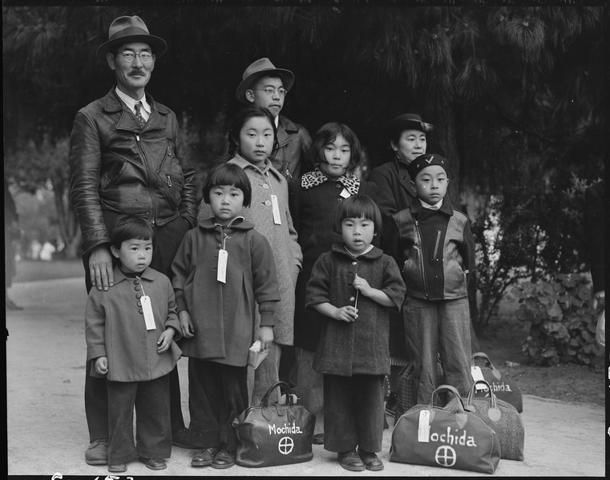
Farmers, fishermen, doctors, businessmen, graduate students, and artists, these interned Japanese-Americans who represented .03% of the total population, and 1% of California’s, sustained almost incalculable economic losses as a result of relocation. Forced to settle their affairs in a matter of days or weeks, they sold their property for a fraction of its worth or left possessions in the care of trustees, where they were often stolen, vandalized, or unloaded for next to nothing. The $400,000,000 in property losses later calculated by the Federal Reserve Bank of San Francisco—of which the U. S. government paid about ten percent in claims—would not take into account the wages, income, interest, and appreciation that the evacuees lost during their incarceration. Nor would it be possible to measure the even greater psychological damage. (Judith Fryer Davidov)
Citizen 13660
A woman seated near the entrance gave me a card with No. 7 printed on it and told me to go inside and wait. I read the “funnies” until my number was called and I was interviewed. The woman in charge asked me many questions and filled in several printed forms as I answered. As a result of the interview, my family name was reduced to No. 13660. I was given several tags bearing the family number, and was then dismissed. At another desk I made the necessary arrangements to have my household property stored by the government. (Miné Okubo)
The Decision to Evacuate the Japanese from the Pacific Coast
In the early afternoon on 11 February Assistant Secretary of War John J. McCloy accompanied Secretary of War Henry L. Stimson to the White House. The President told the War Department secretaries to go ahead and do anything they thought necessary under the circumstances. “We have carte blanche to do what we want to as far as the President’s concerned,” Mr. McCloy informed Colonel Bendetsen immediately after the White House conference. The President specifically authorized the evacuation of citizens. In doing so he observed that there probably would be some repercussions to such action, but said that what was to be done had to be dictated by the military necessity of the situation. Mr. Roosevelt’s only reported qualification was, “Be as reasonable as you can.” Mr. McCloy also told Colonel Bendetsen that he thought the President was prepared to sign an executive order giving the War Department the authority to carry out whatever action it decided upon. (Stetson Conn)
Elusive Truth
 Erik M. Bachman